Calculating ProfitOperating comes after the goods
Operating profit is the second word, and it is honest only after gross has been named.
Name the word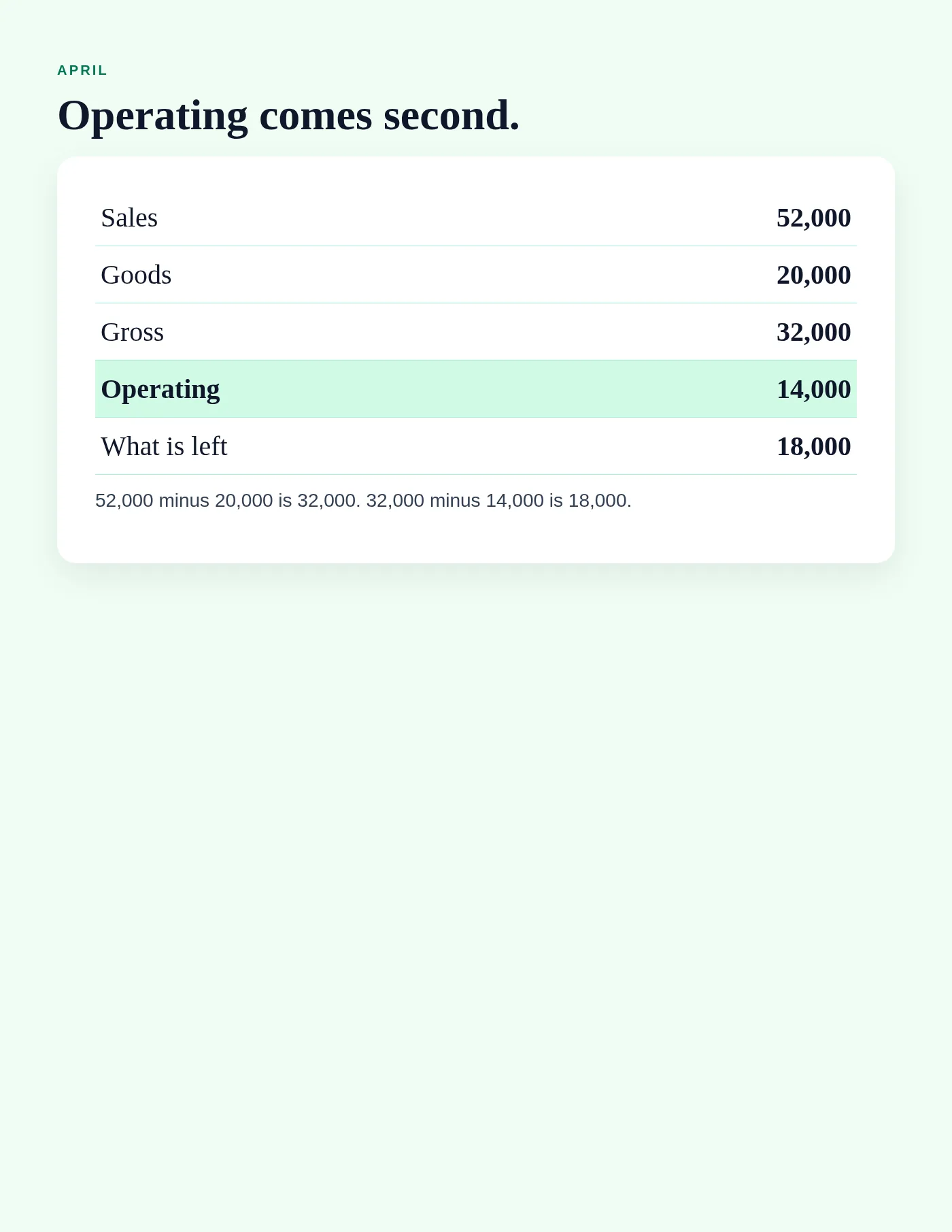
What leaves at the second word
You cannot pull a fair operating figure from a month that still has no gross. The cost of what you sold comes off first. What remains is the pile this word actually works on. Rent, software, insurance, and wages leave here, because they are the cost of keeping the period open.
Payroll inside that word is a cost already incurred. Whether the provider has filed yet does not change the fact that the wage happened. Setup for payday can be handed to a provider you run. This practice does not run payday, and it does not stand at the IRS in your place. The second word still counts the cost.
If someone offers a slice of sales and calls that slice the second word, they are doing a different job. The job here is the subtraction, in order, on a month you have already closed.
Why owners stop too early
This word feels like the real result, because the noise of the goods cost is already gone. What is left, and the question of a draw, are still ahead of it. Stopping here is how a shop celebrates a month that cannot yet fund a transfer.
A cancelled week of jobs can still leave the wages in this word. A storm, a shutdown, or a week when the phone did not ring can rearrange the calendar. Anyone who has watched a week disappear knows the feeling. The wages remain a cost of the period they belonged to, and the close date stays where we set it.
If this is the word that will not agree with the bank, send the month. The reply says whether gross was skipped, and whether cash is doing something the words are not.
Rent is not a goods cost
A shop that buys parts and sells them has a goods cost. The same shop pays rent, software, and wages whether or not a part moved that week. Those costs leave at the second word. Folding the rent into the goods cost makes operating look kinder than the period was, and it makes gross look poorer than the sales were.
We split them on purpose. Gross answers what the goods did. Operating answers what it cost to keep the doors open while those goods moved. Mixing the two is how a slow week and an expensive week get told as the same story.
If the second word is the one that startled you, send that month and say whether rent and wages are already inside it. The reply will not move them into the goods pile to make the sentence nicer.
Send the operating month
Name the month, and say whether wages are already inside it.

You will be talking to the Steven Palmieri practice.