Calculating ProfitAre you actually making money?
The bank balance and the profit line tell different stories. Gross comes off first, then the cost of the period, then what is left, then what can come home. Steven Palmieri, a Tax CFO and the Entrepreneur's CFO, closes the month so those four numbers are real.
Send the month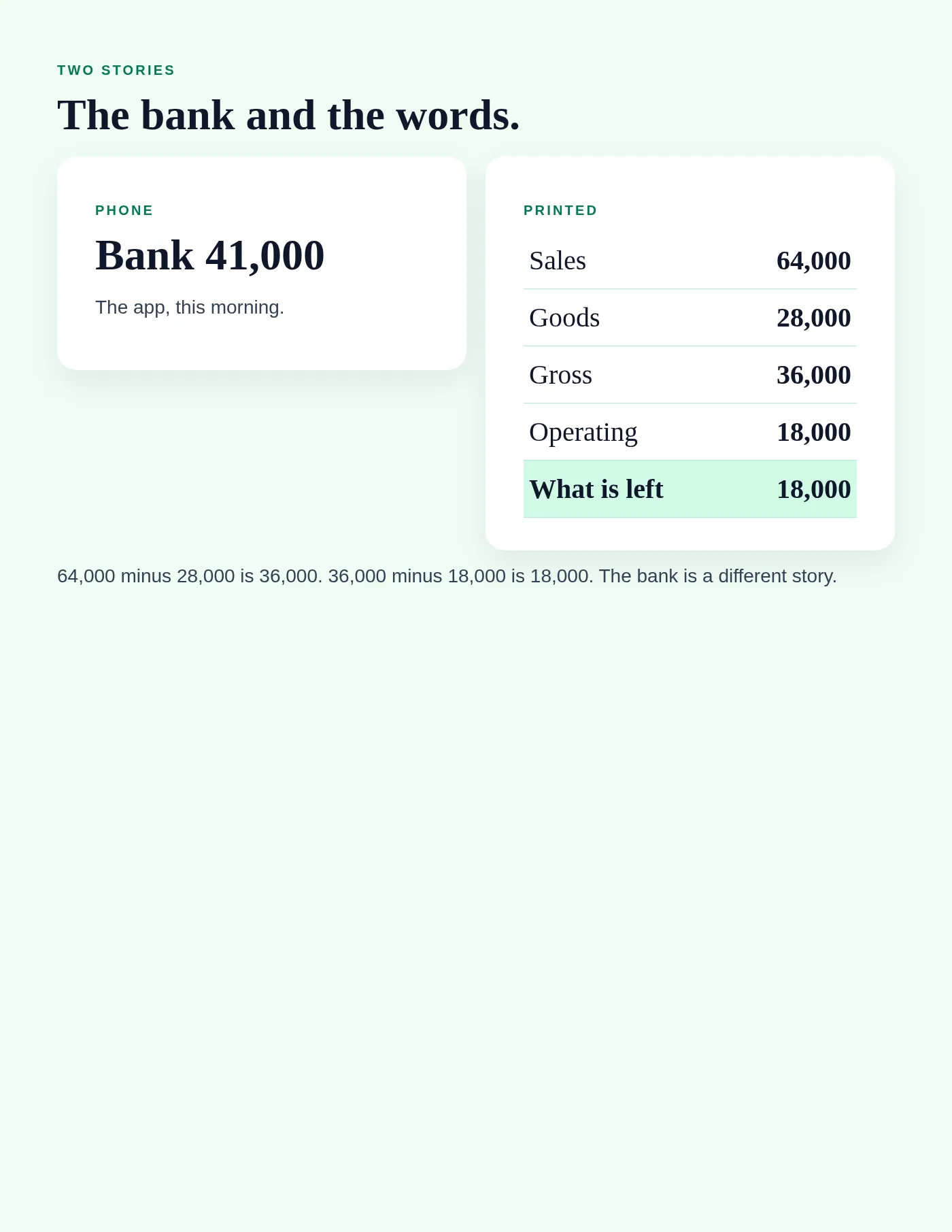
What the month is waiting on

You will be talking to the Steven Palmieri practice.
A bad week and the close
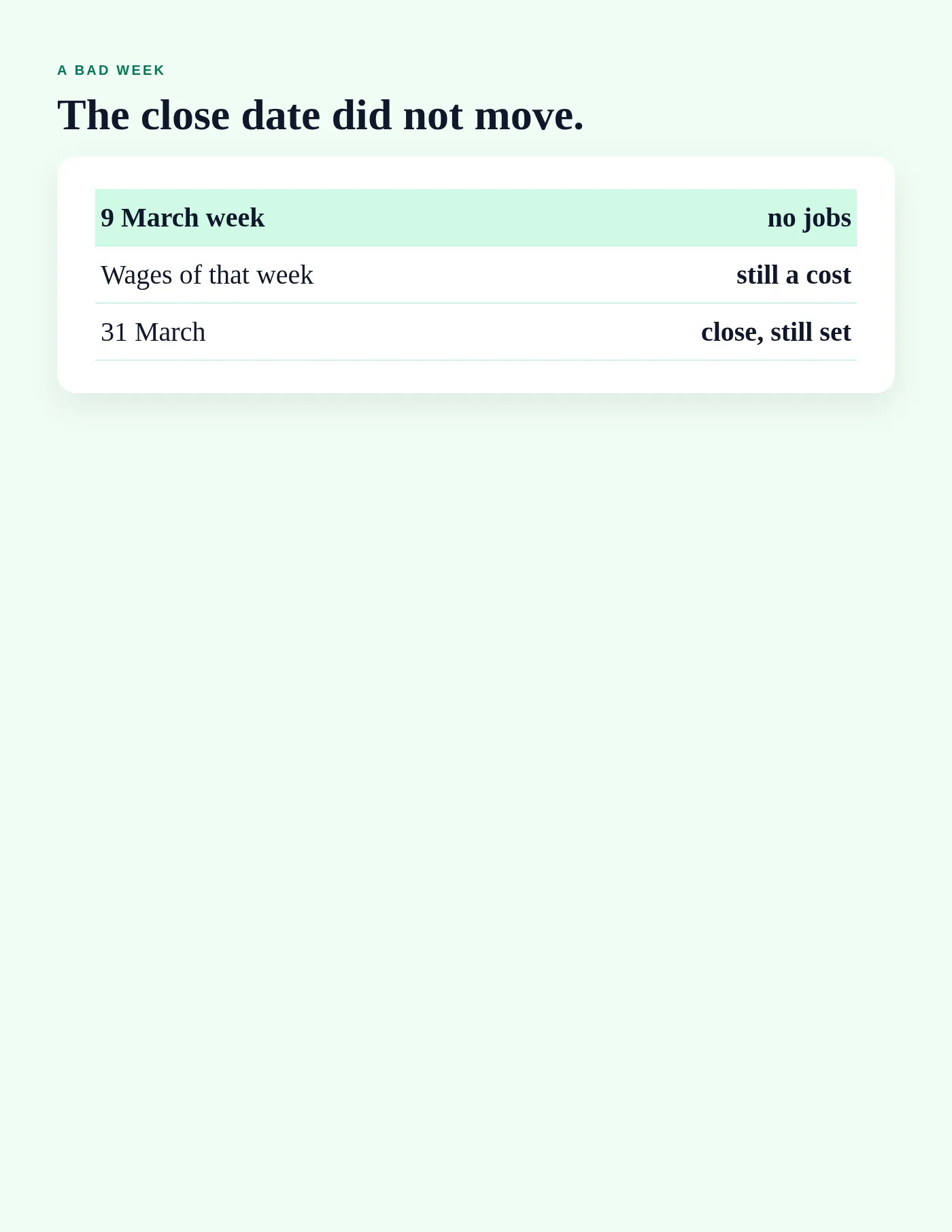
A bad week can wipe out a month of jobs, and the close date still does not move.
Click to see operating ›Tap to see operating ›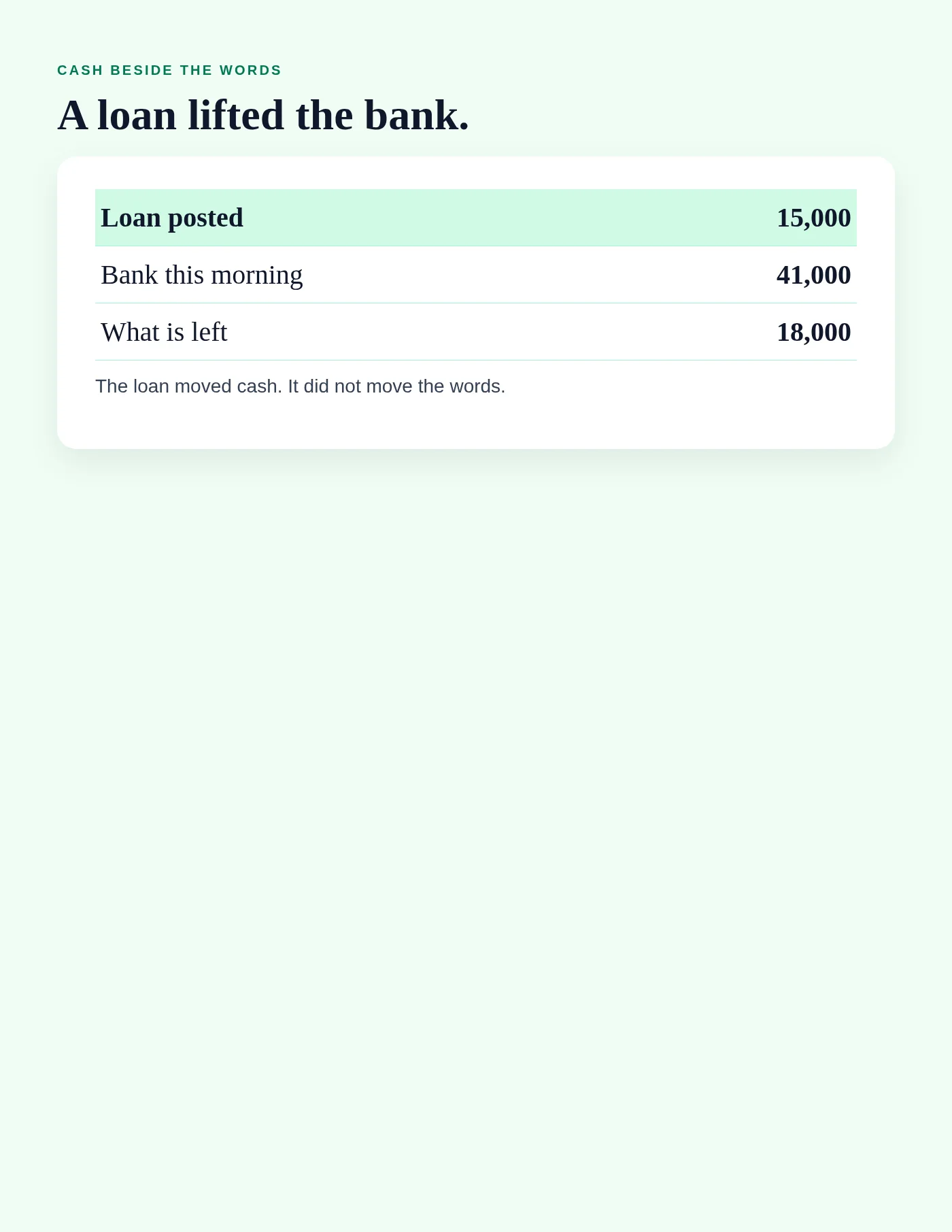
Cash on its own line
A loan can lift the bank while the profit words fall, so cash stays beside the words.
Click to see the reply ›Tap to see the reply ›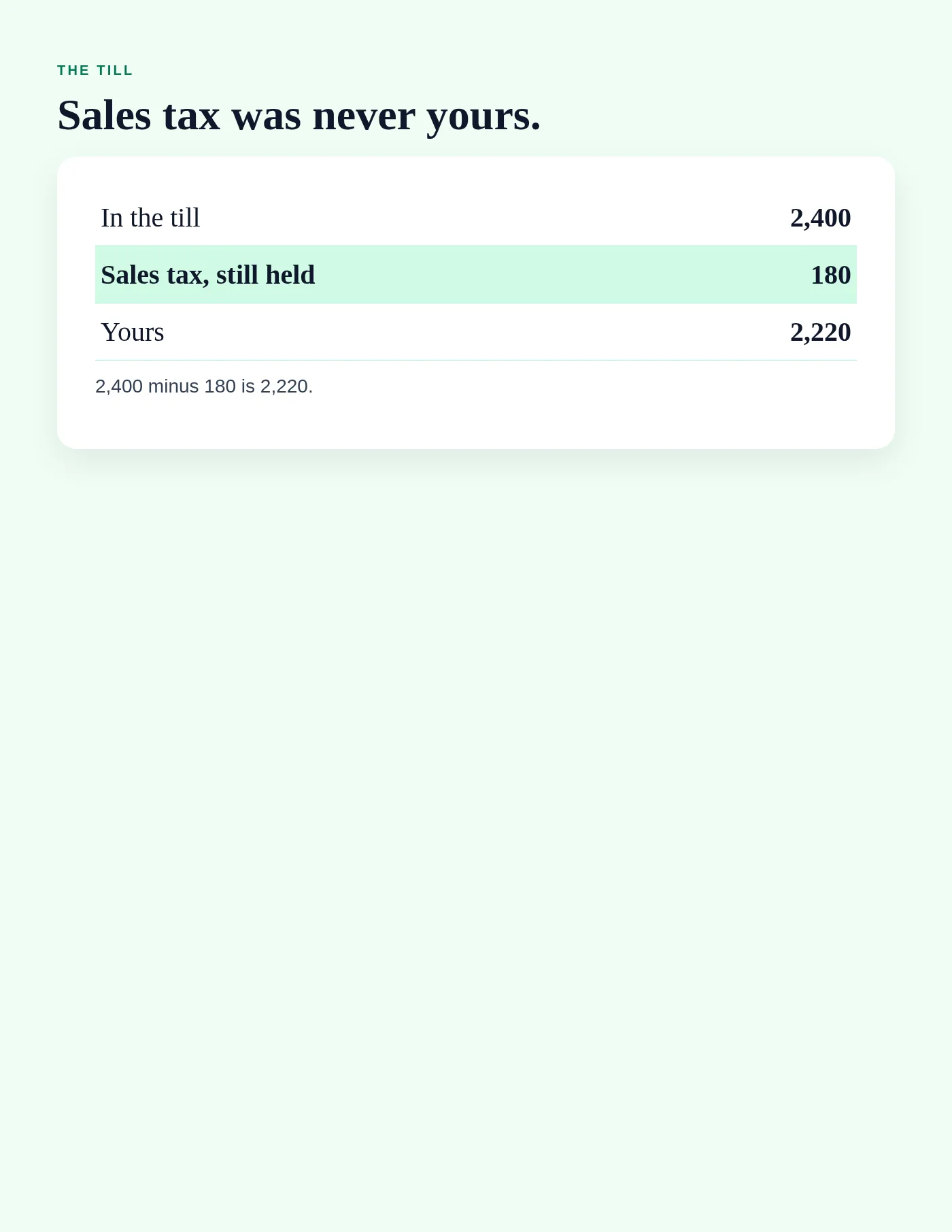
The till is not profit
Sales tax sits in the till until the state is paid, and it was never yours.
Click to see the figures ›Tap to see the figures ›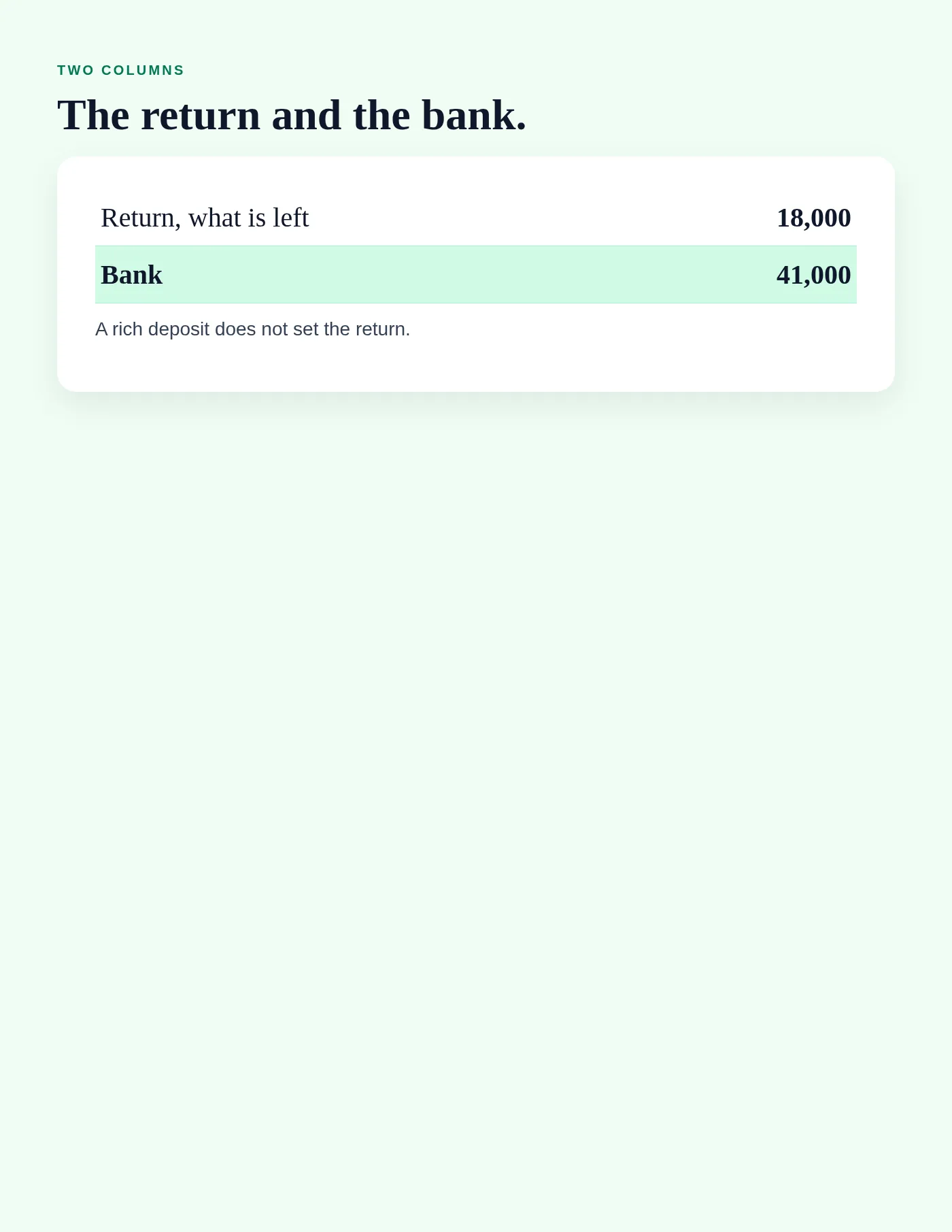
The return and the bank
The return reads a different number from the bank, and a rich deposit does not set that figure.
Click to see the shape ›Tap to see the shape ›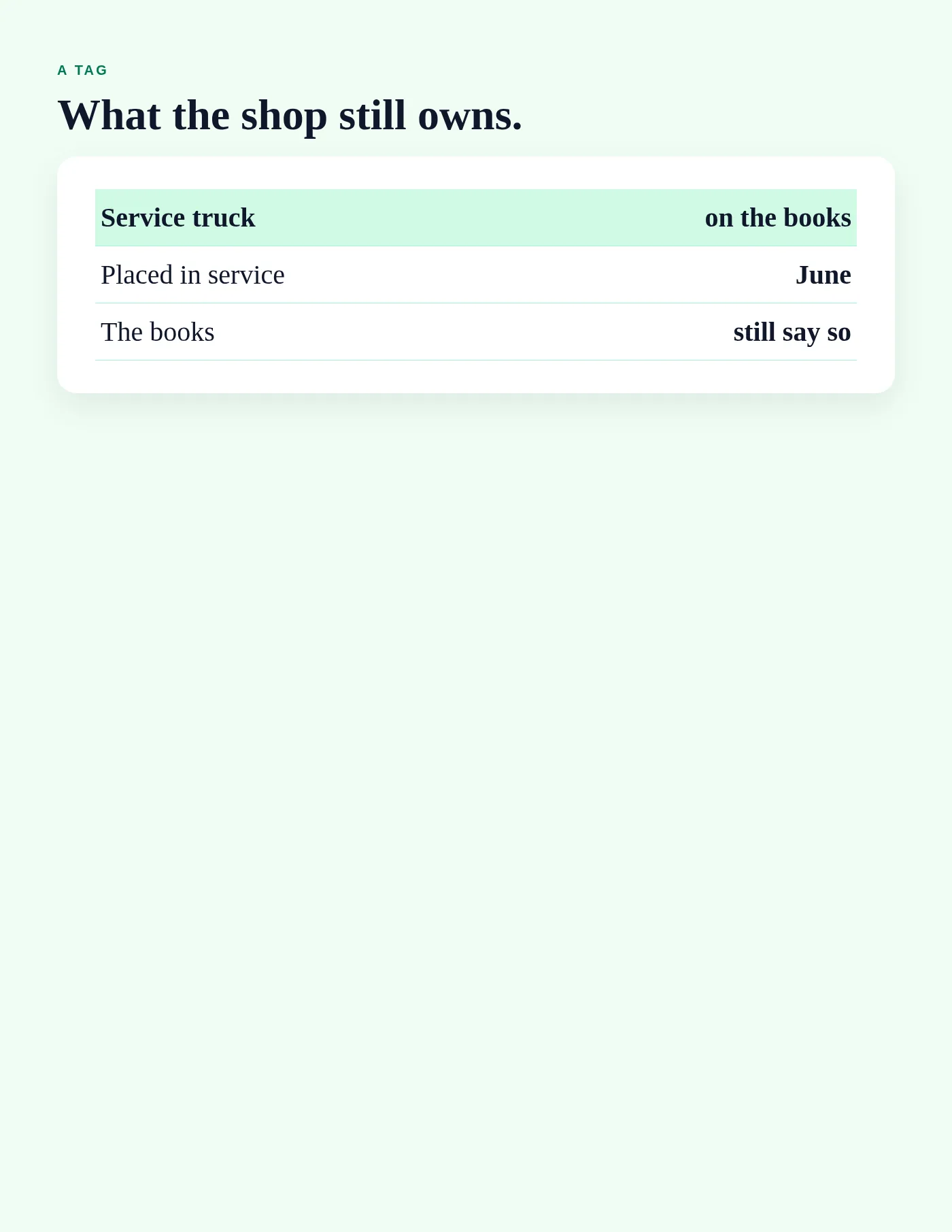
What the shop still owns
What the business still owns has to match the books before a return or a lender asks.
Click to see the questions ›Tap to see the questions ›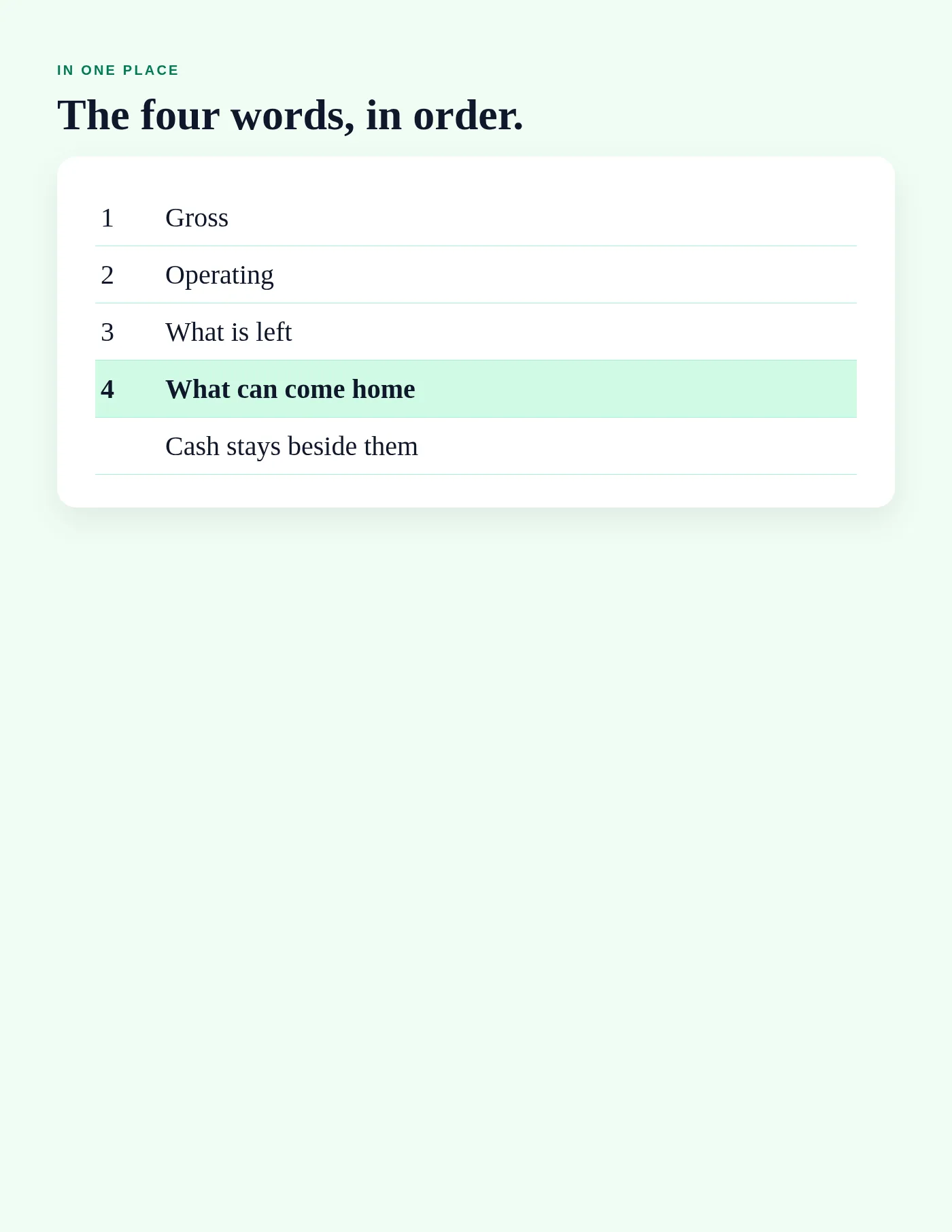
Who holds the order
The four words and the cash line have to live in one place.
Click to meet the practice ›Tap to meet the practice ›Six troubles the bank will not label
Open the matching trouble.
1The bank went up
We read cash on its own line
A deposit can be a loan, a tax you collected, or money you actually earned. The bank will not say which.
2A draw is waiting
We name the last word first
What can come home waits on open bills and on loan payments, not on the balance that looked kind this morning.
3Gross was skipped
We put the goods cost back
Operating profit is a fiction until the cost of what you sold has already come off.
4The till holds tax
We keep a payable
Sales tax collected from a customer is not profit. It leaves when the state is paid, from money that was never yours.
5October is still open
We use the month while it can move
A purchase, a wage setup, or a close can still change what the year will say. January is a different conversation.
6A lender asked for a signature
We point that paper outward
An audit, a review, or a compilation is signed by the firm that holds that work. We will say so before a month is booked.
Steven Palmieri, Tax CFO, keeps this order.
Why the order is the whole argument
Read the rest
Owners ask for one number. The honest answer is a sequence. Gross is what remains after the cost of the goods you sold comes off, and nothing else gets a turn until that word is named. Operating takes the cost of running the period, including payroll that has already been incurred. What is left comes after interest and the rest of what the period still carries. What you can take is last. It waits on cash, on loan payments, and on bills that are still open.
Cash never joins those four. A draw can shrink the bank and leave the words standing where they were. A customer deposit can look like income and still be sales tax you have to send on. The extra line exists because the bank and the words are allowed to disagree, and that disagreement is the thing a single number hides.
A slice of the selling price, offered as a margin box, feels like an answer and skips the sequence. We will not peel one word off into a little machine of its own. The whole job is the four numbers in order, with cash written beside them. A closed month is the only ground those numbers can stand on, and the reading happens before a transfer leaves.
The order the numbers come in does not move either. Storm or quiet week, gross still comes off before anyone talks about a draw. The payment the year requires is a different column from the balance that looked kind on Friday. Profit that counts sales tax is a story the till tells before the truth, and we ask whether the money was ever yours. We keep the return column and the bank column honest, and the bank does not get to answer for the profit. A truck that left in June should not still be earning a story the books no longer believe. A draw taken from a balance that has not been read is what happens when those four words and the cash line do not live in one place.
What a closed month changes
Read the rest
An open month cannot carry a word onto a return. We say whether the month is closed, or we say it is still open, before anyone talks about a draw. If the bank and the books disagree, the month stays open until the note that explains the difference wins. That is ordinary close work, and it is the only ground the later words can stand on.
Estimates belong in that same conversation. April's painful balance is usually four quarters that never sat on a closed month. A safe harbor, where the rules allow one, copies last year's tax instead of this spring's mood. We speak that figure before it leaves. A round number sent only so the quarter feels finished is how the letter in April surprises you.
The federal return still has to be built from months that already agree with the bank. A state income tax, in a state that has one, reads those same months and does not close them for you. Estimated payments follow the closed month, or last year's tax when a safe harbor is allowed, and the number on the return cannot be written after the year has locked.
Payday, the return, and the year while it can still move
Read the rest
The registrations and the provider are chosen while you are on the call. Once that provider is chosen, payday runs on your side of the table. The cost of wages still sits inside operating profit, because the cost already happened. Running the filings is not this practice.
We draft a return only after the bank and the books have stopped arguing. A return drafted on an open year is a story. We will not write that story and call it a return. Once the lingering months are current, each new month ends on a date, you get a short reading, and the choices that can still move the year are named while October is open.
The last page of that reading names the shop's result, the tax still unpaid, and the choices October can still change. Owners keep the sequence because that last page is where the year can still be changed on purpose. It is not a forecast dressed up as a fact.
Send the month you mean
Tell us the shop and which month last agreed with the bank.
You will be talking to the Steven Palmieri practice.
After the words are in order
Read the rest
The past is the months that did not tie. We bring them current or we leave them alone. We do not draft on top of an open year and call that progress. The present is the month with a date on it, a short reading, and a payable for tax that was collected and not yet sent. The future is the choice you can still make, named while the year is open, including the choice to do nothing.
Bring the last month that tied, even if it is older than you wish. We start there. Pretending the summer is already closed is how a draw gets taken from money that was never profit.
A draw taken from the wrong column
Read the rest
The relief people want is a number they can take home. That relief arrives only after the last word is spoken. Taking it from the bank, because the bank looked kind on a Friday, is how a shop spends sales tax, or a loan, or a deposit a customer can still ask back.
We would rather say the month is still open than hand over a kind number that will not survive the day the sales tax is due. The worry of a letter is smaller when the payable was already named. The letter is loudest when the till was treated as profit and the money is already gone.
October still has a vote on this year. A purchase, a wage that was set up and not yet running, or a close that was delayed, all still have a vote. January reads what you already did. We say which month you are in before anyone talks about a transfer.